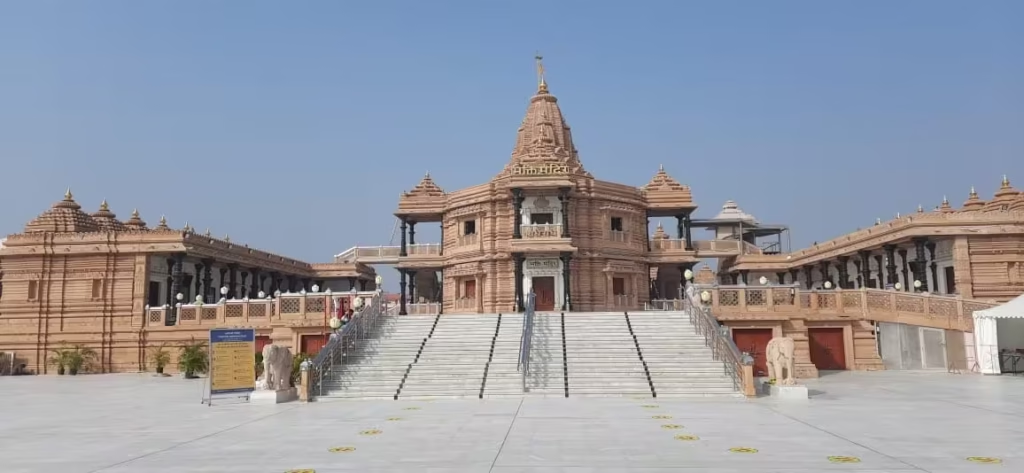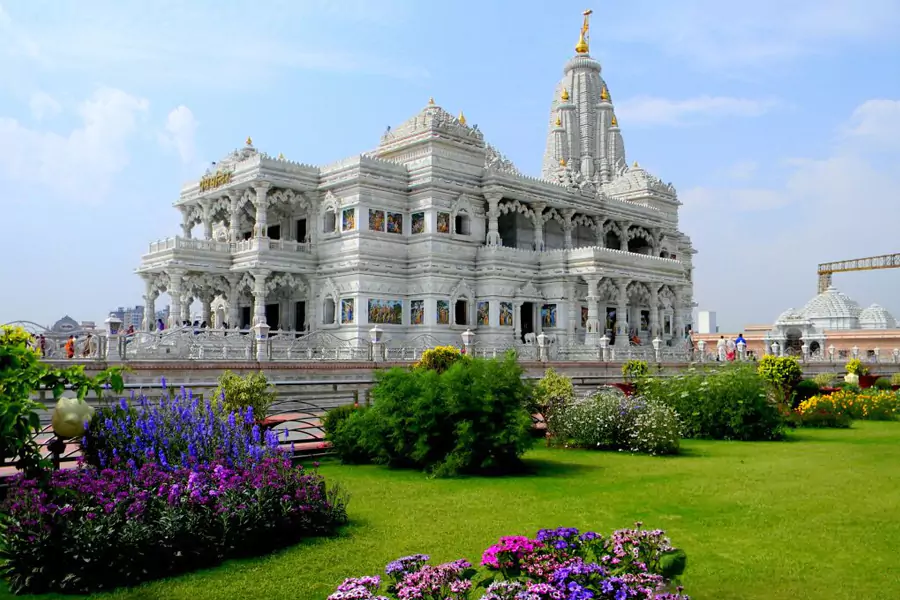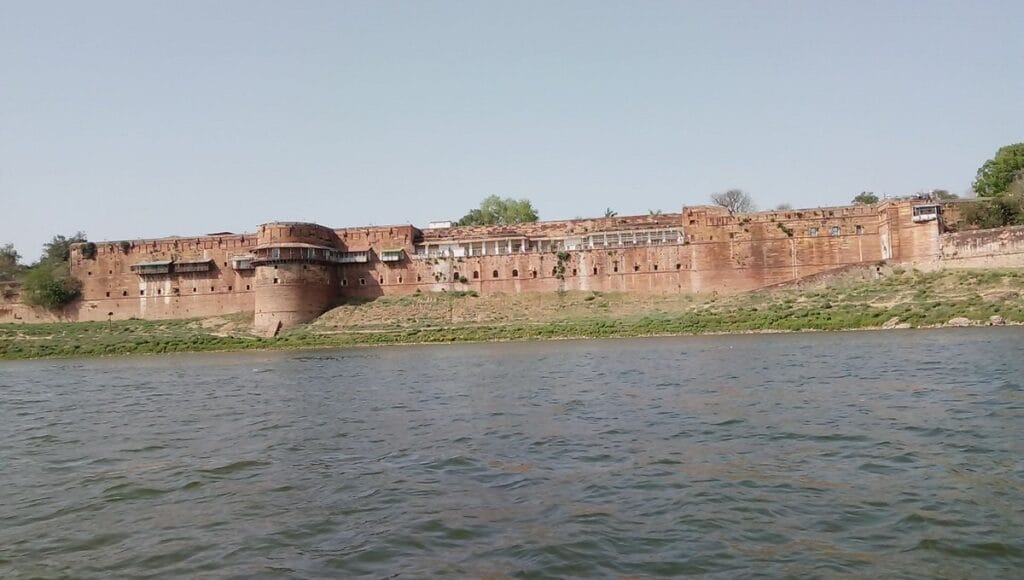
Ayodhya Travel GuideDistances, Routes, Ram Mandir Timings, Weather, Hotels & Must-See
This guide consolidates travel routes (including the best route from Varanasi), distances (Prayagraj and major cities), transport options (road, train, flight), darshan timings for Shri Ram Mandir, airport access, weather advice, hotel recommendations, must-see sites, photography tips and the latest travel advisories.
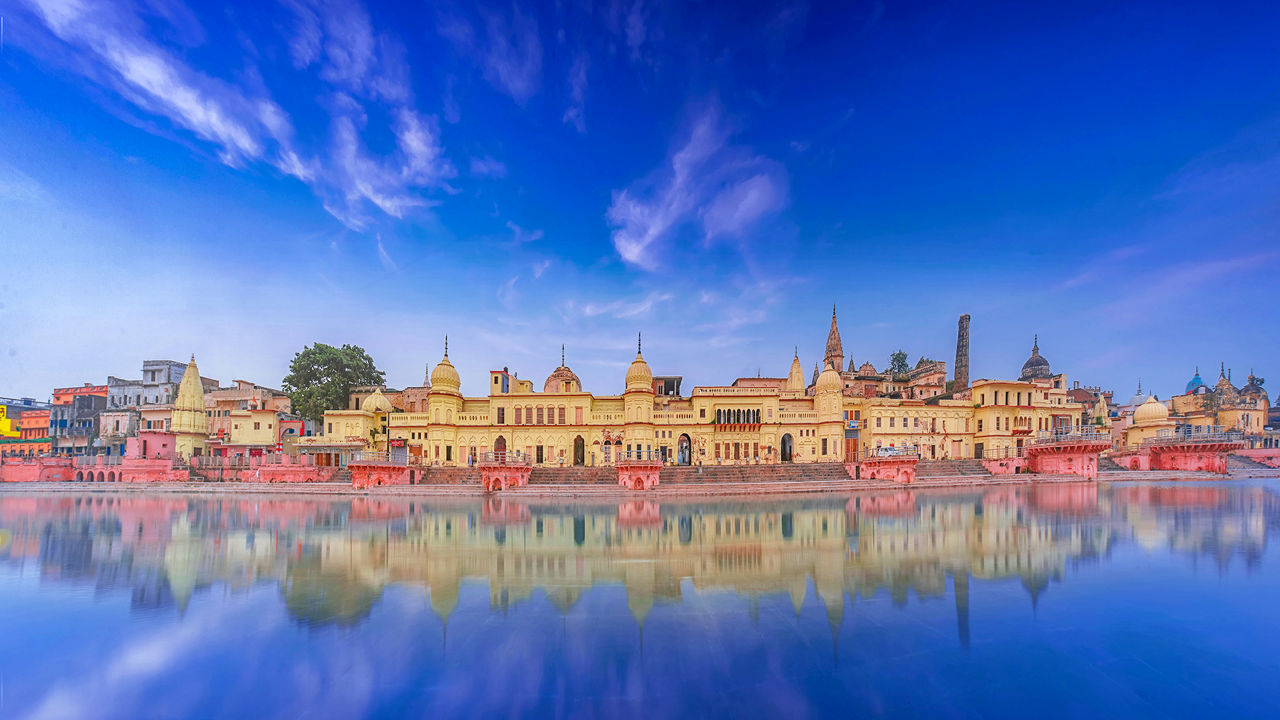
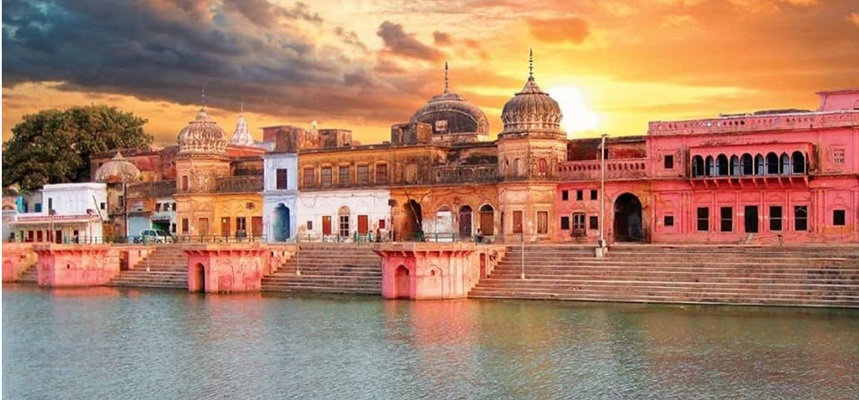
Panoramic view of Ayodhya with temples along the Saryu River
Best Route from Varanasi to Ayodhya
The Varanasi-Ayodhya highway offers well-maintained roads with regular amenities
The most common and practical road route runs Varanasi → Jaunpur → Sultanpur → Ayodhya (≈220–230 km, 4.5–5 hours). Drivers select this corridor for better road quality, predictable travel time and frequent amenities.
Why this route is preferred: The Varanasi–Jaunpur–Sultanpur–Ayodhya axis combines national and state highways with steady maintenance and reliable services. Fuel stations, rest stops and food options are available at regular intervals; towns like Jaunpur and Sultanpur provide convenient mid-journey stops if you wish to break the trip. Road surfaces on major segments have been upgraded in recent years as part of regional highway projects, which reduces transit time and ride discomfort compared to smaller back-roads.
Alternative options: Trains from Varanasi Junction to Ayodhya Dham Junction can be faster and more comfortable for many travellers — overnight and daytime expresses are commonly scheduled. Flight connections via Lal Bahadur Shastri Airport (Varanasi) to Maharishi Valmiki International Airport (Ayodhya) are the fastest but may be limited by frequency and seasonal schedules. Choose flights for time-sensitive travel, trains for balance of cost and comfort, and road for flexibility and sightseeing.
Practical tips: If driving, avoid starting during late-night festival traffic or monsoon-affected hours. For groups or families with luggage, consider private taxis or self-drive; for solo travellers, the train can be safer and less fatiguing. Book in advance during festival windows (Ram Navami, Diwali, Dev Deepawali) when demand spikes.
How Far Is Ayodhya from Prayagraj?
Distance & travel time: The direct road distance from Prayagraj (formerly Allahabad) to Ayodhya is approximately 167 km. Under normal conditions the drive takes about 3.5 to 4 hours, making Prayagraj one of the nearest major urban hubs to Ayodhya and a logical transit point for many pilgrims and tourists.
Route characteristics: The common driving corridor follows Prayagraj → Pratapgarh → Sultanpur → Ayodhya. This route traverses mostly well-maintained highways with multiple towns offering refuelling and refreshment stops. Road conditions can vary locally—monitor weather conditions, especially during monsoon months when localized waterlogging or slower stretches may add time.
Train option: Several express and passenger trains connect Prayagraj Junction and Ayodhya Dham Junction. Train durations vary between about 3.5 to 5 hours depending on whether you use an express (fewer stops) or a passenger service (more stops). Trains are generally reliable and often recommended for travellers who prefer predictable travel time without road traffic concerns.
Traveler advice: If you plan a same-day round trip or are traveling during a festival, consider starting early in the morning to avoid peak traffic and to secure easier access to Ayodhya's temple complex. For overnight or multi-day trips, combine Ayodhya with a Prayagraj stay to explore Saryu ghats and Prayagraj's heritage sites without rushing.
Road, Train, and Flight Options to Reach Ayodhya
Ayodhya is accessible by three practical transport modes: road, rail and air. Each mode has trade-offs in time, cost and convenience; your choice should reflect budget, group size, luggage, time sensitivity and mobility needs.
Road (Car / Taxi / Bus)
Road travel is flexible perfect for local sightseeing and multi-stop itineraries. State and national highways connect Ayodhya with Varanasi, Prayagraj, Lucknow and Gorakhpur. Intercity buses (private and state-run) serve frequent schedules; private taxis or self-drive options offer door-to-door convenience. Expect higher travel times during festival weekends and on some single-lane stretches near older towns.
Train
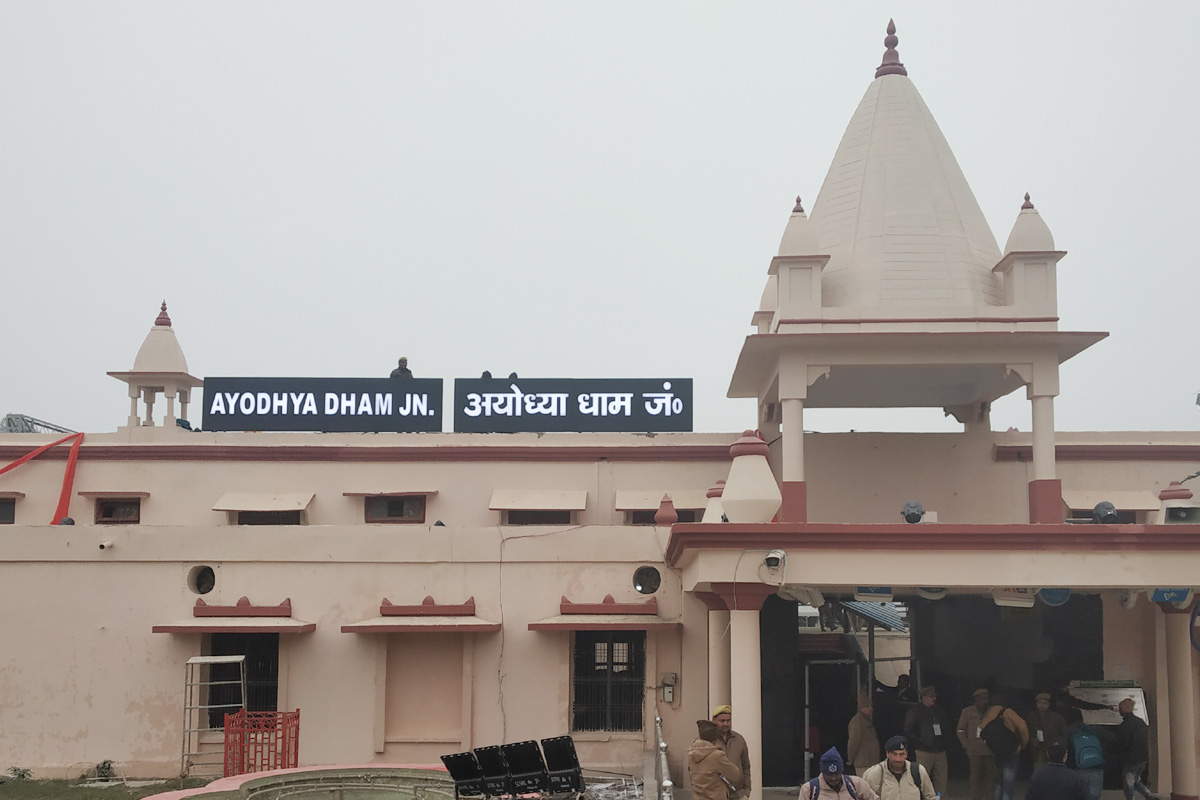
Ayodhya Dham Junction offers excellent rail connectivity from major Indian cities
Ayodhya Dham Junction is integrated into the national rail network. Express trains from Delhi, Lucknow, Varanasi and Prayagraj offer comfortable travel for medium distances. Trains commonly provide reserved seating/berths and are time-efficient for overnight journeys.
Flight

Maharishi Valmiki International Airport provides modern air connectivity to Ayodhya
The Maharishi Valmiki International Airport provides fast, point-to-point travel to/from major metros (flight durations from Lucknow or Varanasi under an hour; from Delhi, Mumbai or Bangalore, typically 1–2 hours including possible connections). Flights reduce transit fatigue but require airport transit time and early arrivals for security procedures.
Choosing the best option
- Choose flights for the fastest door-to-door time from distant metros.
- Choose trains for cost-efficient, reliable inter-city travel with moderate comfort.
- Choose road travel for group flexibility, sight-seeing en route, or when public transit times are inconvenient.
Ayodhya Ram Mandir Darshan Timings
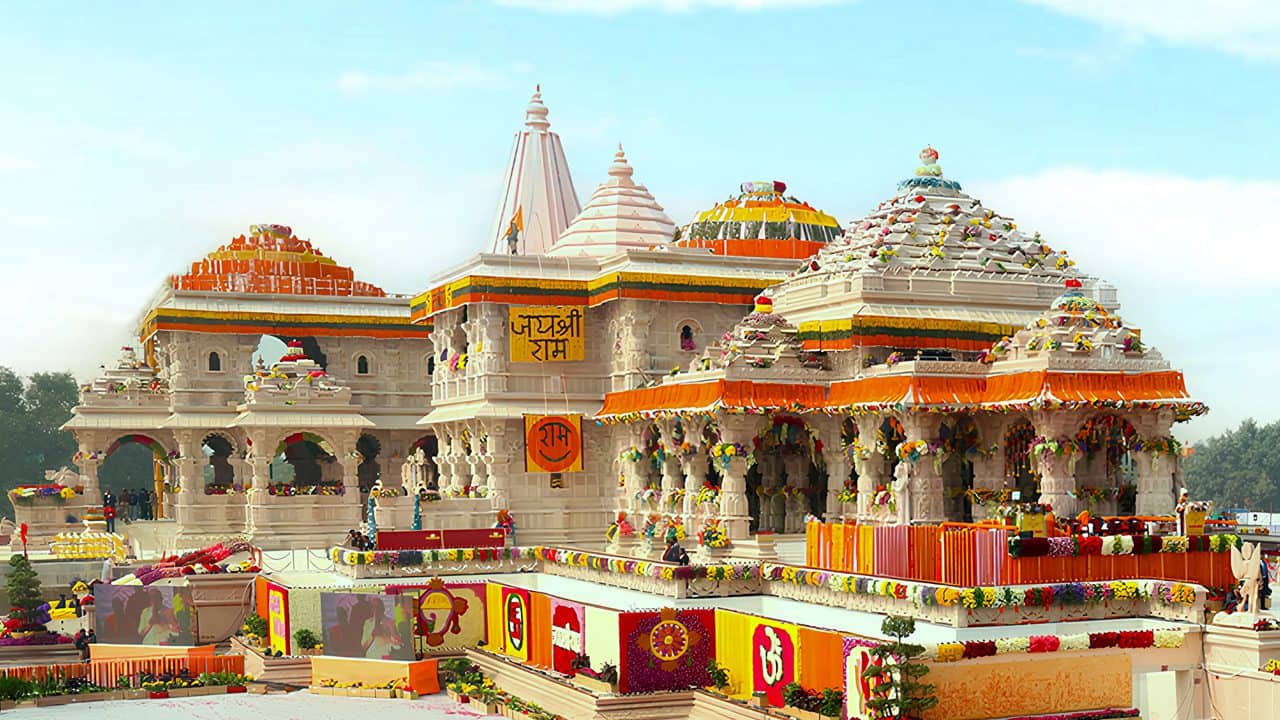
The majestic Shri Ram Mandir during morning darshan hours
The Shri Ram Mandir follows structured darshan windows and aarti ceremonies. Standard public darshan is commonly organized in two principal blocks to manage crowds and ensure respectful worship:
- Morning Darshan: 6:30 AM – 11:30 AM (with Mangala and Shringar rituals early morning)
- Afternoon / Evening Darshan: 2:00 PM – 7:30 PM (with Sandhya aarti near sunset)
Temple administration may operate scheduled e-passes or timed-entry slots for high-demand days. Festival occasions (Ram Navami, Diwali, major Ekadashis) bring exceptionally large crowds and often require pre-registration, staggered entry and extra security checks. Darshan procedures commonly include ID verification, mandatory security screening, and restrictions on bags, footwear and electronic devices in certain sanctum areas.
Tips for smooth darshan: Arrive at least 60–90 minutes ahead of peak slot times to allow for security clearance. Prefer early morning darshan when crowds are thinner and the experience is most serene. For senior citizens and visitors with mobility concerns, inquire about dedicated assistance queues or reserved time slots with the temple management or your hotel.
Weather Forecast in Ayodhya Today

Ayodhya experiences distinct seasons: pleasant winters, hot summers, and refreshing monsoons
Ayodhya lies in the north-central plains and experiences a subtropical climate with marked seasonal variation. For today you can expect early morning coolness with warm afternoons. Typical mid-season ranges are:
- Morning lows: 15–22°C (season dependent)
- Afternoon highs: 28–35°C (higher in summer)
- Humidity: Moderate; monsoon months can feel muggy
Visitor guidance: The weather is most pleasant between October and March — ideal for outdoor rituals, ghats, and walking tours. Summer months (April–June) can be hot and uncomfortable for prolonged outdoor activity; plan early-morning or late-evening schedules. During monsoon (July–September), occasional showers may disrupt road travel and river-level access at ghats. Always check a live 7–10 day forecast before departure for updated rain and temperature advisories.
Packing checklist: light breathable fabrics for daytime, a light jacket for winter mornings, an umbrella or raincoat in monsoon, comfortable shoes for temple precincts and unpaved ghats, and refillable water to stay hydrated.
Top Hotels and Dharamshalas Near Ram Mandir

Ayodhya offers accommodation options for every budget, from simple dharamshalas to modern hotels
Ayodhya offers a broad accommodation mix to suit different budgets and traveler types: simple dharamshalas for budget pilgrims, comfortable mid-range hotels for families, and a growing number of higher-standard properties catering to longer stays and international guests. The decision often balances price, proximity to Ram Mandir, and available amenities.
Dharamshalas & Budget Options
Basic dharamshalas (including the notable Birla Dharamshala) provide clean rooms, simple vegetarian meals and immediate proximity to the Mandir complex. They are ideal for short stays and pilgrims who prioritize location over luxury.
Mid-Range Hotels
Mid-range properties (₹2,000–₹5,000 per night) commonly include AC rooms, attached bathrooms, on-site dining and reception services; many maintain tie-ups for darshan assistance and local transport booking.
Booking & Accessibility Tips
- Book early during festivals — hotels and dharamshalas fill quickly.
- Ask hotels about vehicle access: some lanes near the Mandir are pedestrianized or narrow.
- For mobility-impaired visitors, request ground-floor rooms and assistance for temple queues.
How to Reach Ayodhya Airport (Maharishi Valmiki International Airport)
Maharishi Valmiki International Airport offers modern facilities and easy access to Ayodhya city
Maharishi Valmiki International Airport is the primary air gateway for Ayodhya. The modern airport improves connectivity and reduces overland travel time for visitors coming from distant metros. Here is how to reach the city center from the airport and vice versa.
Taxi & App-Cabs
Prepaid taxis and app-based cabs are the most convenient and reliable option. Typical transit time to Ram Mandir is about 20–30 minutes depending on traffic. Use authorized counters at the airport to avoid overcharging.
Shuttle / Bus Services
During festival peaks the airport or local authorities sometimes run shuttle buses to major hotel clusters and the Mandir plaza. Check airport information desks or hotel concierge for scheduled services on your travel day.
Arriving Tips
- Book transfers in advance during holidays to secure a reliable ride.
- If arriving late at night, prefer prepaid taxis rather than unfamiliar local drivers.
- Allow buffer time for security and baggage handling, especially during busy travel seasons.
Must-See Places near Ayodhya Ram Mandir
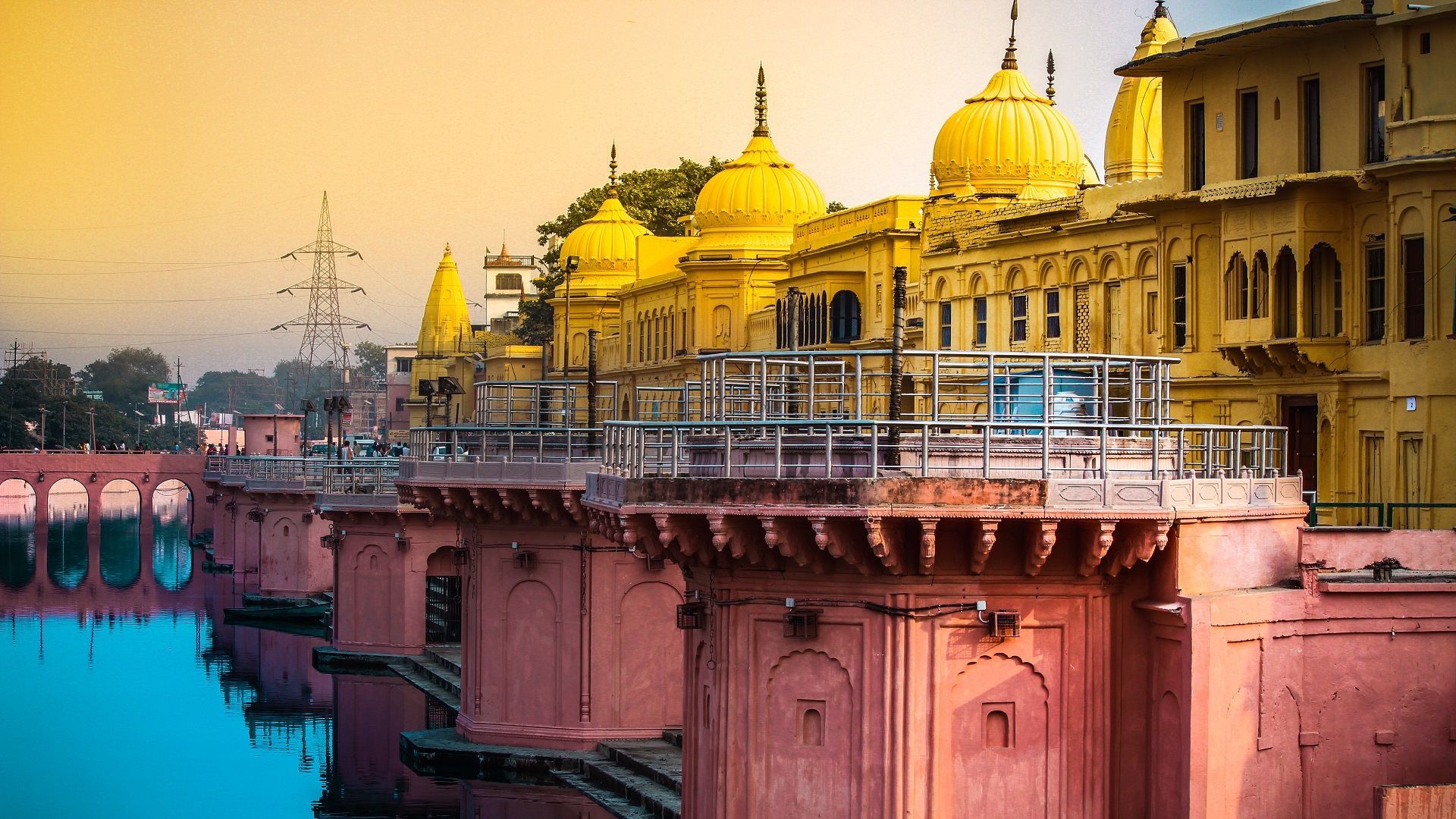
Key spiritual sites in Ayodhya beyond the Ram Mandir
Ayodhya's spiritual landscape extends well beyond the Ram Mandir. Many notable sites cluster within walkable or short-drive distances and add historical and devotional context to a temple visit.
- Hanuman Garhi: A hilltop shrine with a strong local following and panoramic city views; accessible via steps or short drives.
- Nageshwar Nath Temple: An ancient Shiva shrine closely linked to local rituals and festivals.
- Saryu Ghat & Ram ki Paidi: Riverside ghats ideal for early-morning prayers, aarti views and reflective photography.
- Guptar Ghat: Associated with mythic episodes of Ramayana tradition, quieter and well-suited for contemplative visits.
- Local markets: Explore religious books, puja items, devotional music and traditional sweets in the old city lanes.

Saryu River ghats provide serene spaces for prayer and reflection
Allow at least half a day to visit two or three of these sites; combine a morning ghat walk with a midday visit to Hanuman Garhi or a museum stop if time permits.
Distance Chart for Ayodhya From Major Indian Cities
Use this quick reference to evaluate travel options and plan multi-city circuits. Distances are approximate road values and may vary by chosen route.
| Origin City | Approx. Distance (km) | Typical Road Time |
|---|---|---|
| Varanasi (Kashi) | 220–230 | 4.5–5 hrs |
| Prayagraj (Allahabad) | 167 | 3.5–4 hrs |
| Lucknow | 135 | 2–3 hrs |
| Delhi | 690–720 | 10–12 hrs |
| Kanpur | 200 | 4 hrs |
| Gorakhpur | 140 | 3 hrs |
| Agra | 520 | 8–9 hrs |
| Mathura / Vrindavan | 560–580 | 9–10 hrs |
Latest Ayodhya News
Ayodhya continues to evolve rapidly as a pilgrimage and cultural hub. Key advisories and developments to note:
- Airport expansion: Ongoing upgrades increase flight capacity during major festivals; check airline notices for special flights.
- Traffic management: On high-footfall days authorities may restrict private vehicle access near the Mandir; rely on official parking and shuttle services.
- Infrastructure works: Road and public-space projects periodically alter local routes; allow extra buffer time for commutes.
- Safety & security: Expect enhanced security measures and random checks at major entry points during seasonal peaks.
Always confirm train and flight times within 24 hours of travel and follow local advisories from official tourism or municipal channels on festival dates and access rules.
Photography Spots: Ram Murti & Mandir Complex

Ayodhya offers countless photographic moments from architectural details to spiritual ceremonies
Ayodhya offers numerous high-value photo opportunities for both casual visitors and serious photographers. Respect sanctity rules while shooting, and follow signage indicating restricted areas.
Top vantage points
- Mandir outer courtyard: Capture architectural detail, pilgrim crowds during aarti, and temple façade in golden light.
- Saryu Ghat: Sunrise and sunset reflections on the river make for dramatic landscape images.
- Hanuman Garhi: Elevated views that frame the city and temple spires against the sky.
- Old lanes and markets: Close-up, street-style images of devotion, handicrafts, and local life.

Sunrise at Saryu River creates magical photographic opportunities
Practical tips: Use a wide angle for architectural shots, a medium telephoto for ritual details from respectful distance, and avoid flash in sanctum zones. Early mornings offer cleaner light and fewer obstructions for unobstructed compositions.
Frequently Asked Questions (FAQ)

Get answers to common questions about visiting Ayodhya
What is the best time to visit Ayodhya?
October to March is generally the most pleasant period with mild days and cool mornings — ideal for temple visits and ghat walks.
How long is the drive from Varanasi to Ayodhya?
Approximately 4.5–5 hours by road for the Varanasi → Jaunpur → Sultanpur → Ayodhya route (≈220–230 km).
What is the name of Ayodhya's airport?
Maharishi Valmiki International Airport serves Ayodhya with domestic connections and expanding services.
Are photos allowed inside the Ram Mandir?
Photography rules vary by area. Outer courtyards usually permit photography; inner sanctum and specific ritual zones may restrict cameras. Follow temple signage and staff instructions.
How To Reach Ayodhya from Varanasi
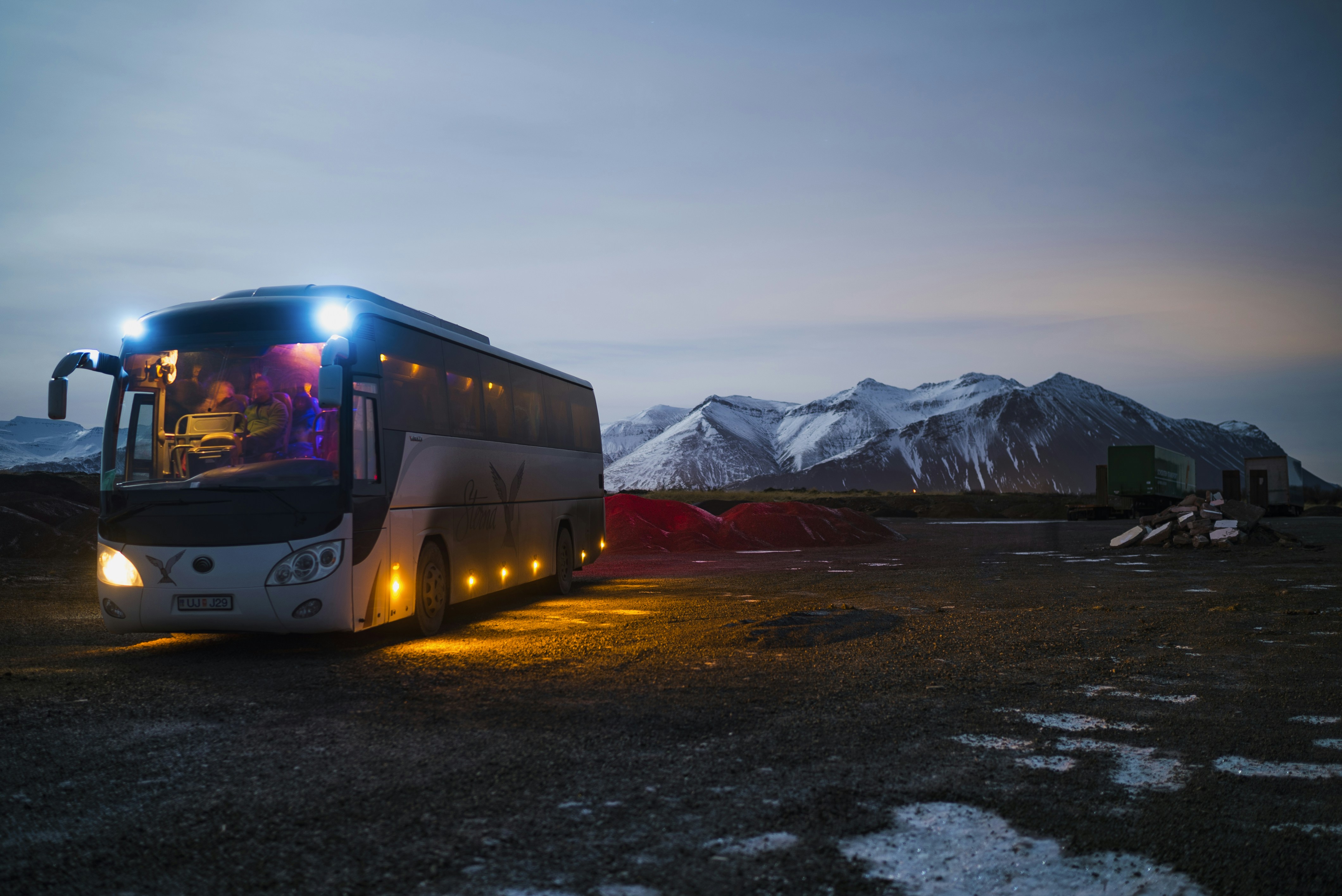
Follow these steps for a smooth journey from Varanasi to Ayodhya
- Decide transport mode (road/train/flight) based on time and budget.
- If driving, follow Varanasi → Jaunpur → Sultanpur → Ayodhya and plan fuel/food breaks at Jaunpur.
- If by train, book express or reserved seats from Varanasi Junction to Ayodhya Dham Junction; arrive 30–45 minutes early.
- If flying, book flights into Maharishi Valmiki International Airport and arrange a prepaid taxi to the Mandir area.